
Beginners Guide for a Colour Vision Test
Published On: 16/Dec/2025Table of Contents
- • What Is a Colour Vision Test?
- • Importance of Colour Vision Testing
- • How does Colour Vision Works
- • Types of Colour Vision Defects
- • Types of Colour Vision Tests
- • Specifications of the Test
- • Understanding and Interpreting Your Test Results
- • Is Color Blindness Treatable?
- • Who Needs to Take a Color Vision Exam?
- • How Frequently Should You Get this Eye Test?
- • Color Vision Test Equipment Used in Medical Facilities
Colour vision is our eyes' capacity to distinguish different colours utilizing particular cells in the retina known as cone cells, which respond to red, green, and blue light. It is vital for day-to-day activities, including selecting ripe fruits, reading traffic signals, matching clothes, and accurately identifying visual information. A color vision test determines a person's ability to discriminate between colors and whether they have trouble seeing certain hues, particularly red and green.
What Is a Colour Vision Test?
A color vision test is a straightforward eye exam that assesses your ability to distinguish between various colors. Its primary goal is to identify deficits in color vision, particularly the inability to discern between hues of red, green, or occasionally blue. Children, adults, and professionals like drivers, pilots, electricians, and anybody whose job depends on exact color judgment can all benefit from this test. A color vision test focuses on how your eyes and brain identify colors, as opposed to a basic eye test that assesses eyesight clarity and general eye health.
Importance of Colour Vision Testing
Color vision testing is vital because it detects color blindness early and ensures that people can safely conduct common jobs such as driving, which requires them to recognize traffic lights. Additionally, it is important to maintain employment eligibility in occupations where precise color identification is essential, such as pilots, defense people, railroad employees, and electricians. In addition, the exam can assist medical professionals in identifying possible retinal or optic nerve issues that could impair vision. Early identification of color vision problems helps kids learn and participate in school activities more effectively by avoiding color confusion while reading, writing, and classroom assignments.
How does Colour Vision Works
Color vision is achieved through the use of cone cells in the retina, which are responsible for detecting various wavelengths of light. Cones come in three varieties: red-sensitive, green-sensitive, and blue-sensitive. Each variety reacts well to a certain color spectrum. These cones absorb light as it enters the eye and transmit electrical signals to the brain. Similar to combining three fundamental colors to create numerous shades, the brain then mixes and compares these signals to produce the vast spectrum of colors we see. The brain receives inadequate or incorrect knowledge when one or more types of cone cells are absent, weak, or malfunctioning. Because of this, some colors such as reds and greens will seem the same or confused, which might result in a color vision impairment. This may have an impact on activities that depend on precise color perception, such as reading maps, dressing appropriately, recognizing traffic signals, or carrying out tasks that call for accurate color judgment.
Types of Colour Vision Defects
A person's ability to perceive particular color groups is impacted by a variety of color vision impairments. The most prevalent type is red-green color blindness, which causes reds, greens, and comparable hues to appear muted or similar. Less frequently occurring, blue-yellow color blindness makes it challenging to discriminate between blues and greens or yellows and reds. Rarely, some persons develop complete color blindness (achromatopsia), which results in little to no color perception and everything appearing in shades of gray. In addition to genetic factors, certain drugs, eye illnesses (such as glaucoma or macular degeneration), and the aging process of the eye can all contribute to the development of these impairments.
Types of Colour Vision Tests
Different kinds of color vision tests make it simpler to identify any kind of color vision impairment by evaluating how well a person can understand and differentiate colors. These studies examine how the eyes and brain react to different colors using a variety of patterns, plates, and light-based techniques. Each type provides distinct insights into an individual's ability to sense color distinctions, ranging from basic screening tools to more comprehensive diagnostic examinations.
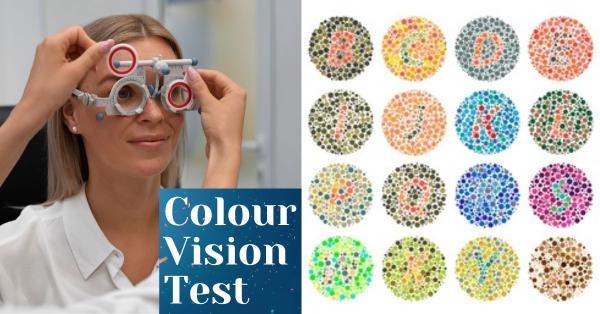
Color vision tests come in a variety of forms, each intended to evaluate a certain facet of color perception. The most popular technique for identifying red-green deficits is the Ishihara Test, which uses color plates with hidden numbers or symbols that are simple to read for people with normal color vision but difficult for those with red-green problems. It is a fast and efficient screening approach. The Farnsworth D-15 Test, which helps identify both the existence and severity of a deficiency, asks participants to arrange colored caps according to shade similarity for a more thorough analysis. The HRR (Hardy–Rand–Rittler) Test goes one step further by identifying both red-green and blue-yellow deficiencies. It is appropriate for clinical and occupational examinations since it uses plates with a variety of symbols and contrasts to score the severity of color vision issues. For clinics and professional screenings, Modern digital or computerized color vision tests are perfect because they provide increased accuracy, quicker screening, automated scoring, and consistent results without the possibility of plate fading. Online color blindness tests also offer a practical at-home option for a general check, but they cannot take the place of professional examinations and are not medically accurate.
Specifications of the Test
A color vision test is a short, painless process that typically takes five to ten minutes. Depending on the sort of test, you may be asked to identify numbers, recognize patterns, or arrange colored objects while sitting comfortably away from the test charts or gadget, usually at eye level. The test is an easy and stress-free approach to assess color vision because it doesn't require eye drops or dilation and is safe for both adults and kids.
Understanding and Interpreting Your Test Results
You can determine how well your eyes detect color by understanding the findings of your color vision test. "Normal color vision" refers to the ability of your eyes and brain to accurately identify every shade of red, green, and blue. A slight, moderate, or severe impairment denotes a growing inability to distinguish between specific colors, typically blue-yellow or red-green. When it comes to the Ishihara test, accurately reading the majority of plates often shows normal vision, whereas mistakes or misreads indicate a red-green deficiency. In order to more accurately determine the kind and severity of the color vision deficiency, the doctor may suggest additional diagnostic tests, such as the Farnsworth D-15 or HRR tests, if the results indicate serious problems or are ambiguous.
Is Color Blindness Treatable?
Since genetic color blindness is caused by inherited variations in the retina's cone cells, there is currently no permanent treatment. However, if the underlying illness is cured, acquired color vision deficiencies caused by eye disorders, drugs, or aging it may occasionally improve. Although there isn't a cure, there are a number of management strategies that can assist people deal with color vision issues. These include digital programs that improve color perception, special tinted glasses or contact lenses, and employment coaching to steer clear of tasks that significantly depend on precise color discrimination. These solutions enable people to adjust successfully while also improving everyday life and safety.
Who Needs to Take a Color Vision Exam?
For a variety of individuals, a color vision test is advised. In order to identify early color vision problems that may impact learning, children may be examined at school. While pilots, aviation candidates, railway employees, and defense applicants frequently need the test for employment eligibility, drivers need excellent color perception for traffic lights. The test can be used to track changes in vision in people with diabetes, glaucoma, or retinal issues. It can also be used to detect any impairments in color vision in those who have visual discomfort or trouble differentiating colors.
How Frequently Should You Get this Eye Test?
Age, occupation, and eye health all affect how frequently color vision tests are performed. Unless additional symptoms emerge, a single childhood test is adequate for the majority of people. Periodic testing may be necessary as part of normal medical exams for professionals in occupations requiring precise color perception, such as pilots, drivers, railroad employees, or electricians. To make sure any new problems are quickly identified and treated, people should also think about retesting following eye surgery, medication changes, or if they observe changes in color perception.
Color Vision Test Equipment Used in Medical Facilities
In order to reliably and efficiently assess patients' color perception, clinics are increasingly adopting sophisticated color vision test equipment and digital color vision charts. Compared to conventional techniques, eye testing machines provide more accuracy, quicker screening, automated scoring, and consistent findings. To get rid of problems like plate fading, human error, and limited testing scope, many eye care facilities are switching from Ishihara booklets to digital systems. Clinics may offer dependable, contemporary, and patient-friendly evaluations that satisfy current clinical requirements using Matronix's professional-grade color vision testing systems.
Testing for color vision is essential for preserving general eye health because it can assist in identifying color deficits early, guarantee safety during daily activities, and support professional needs. Testing enables a better knowledge and management of color vision issues for professionals, adults, and children. You may safeguard your eyesight, enhance your quality of life, and make wise decisions regarding eye care by being conscious of how you see color and getting tested as soon as possible. Making eye health a priority now will guarantee future vision that is safer, clearer, and more vibrant.
Author's Bio

Mr. Rajender Gupta
(Director, Matronix Optotechnik Pvt. Ltd.)
With a vision to make advanced eye-care technology accessible across India and beyond, the Director of Matronix Optotechnik Pvt. Ltd. has been leading innovation in smart ophthalmic solutions since founding the company in 2019. Building on decades of industry experience and the global legacy of the Matronix brand since 2007, he has transformed the company into a trusted name in precision eye-testing equipment.
Related Posts


Frequently Asked Questions
A colour vision test is an eye examination that checks a person’s ability to correctly identify and differentiate colours. It is important because colour perception plays a key role in daily activities such as reading traffic signals, choosing objects by colour, and performing job-specific tasks. The test also helps detect colour vision deficiencies early and can indicate underlying eye or nerve conditions.
Colour vision tests can detect several types of deficiencies, including red-green colour blindness (the most common), blue-yellow colour vision defects, and in rare cases, complete colour blindness (achromatopsia). These defects may be inherited or acquired due to eye diseases, medications, or ageing.
A colour vision test is quick, painless, and usually takes 5–10 minutes. During the test, a person may be asked to identify numbers or symbols on coloured plates, arrange coloured objects in order, or respond to colours shown on a digital screen. The test does not require eye drops or pupil dilation and is safe for both children and adults.
There is currently no permanent cure for inherited colour blindness. However, acquired colour vision problems may improve if the underlying cause is treated. While colour vision cannot be fully restored, special tinted lenses, digital colour-enhancing tools, and adaptive techniques can help individuals manage colour vision deficiencies more effectively in daily life and work.