Understanding the 6/6 Eye Test Precision
Published On: 22/Nov/2025The commonly accepted standard benchmark for normal vision is the 6/6 eye test, often known as the visual acuity test using new and improved eye test machines, which evaluates a person's ability to see properly at a distance of six meters. This test primarily assesses sharpness of sight, but a score of 6/6 shows that a person can see detail at the expected level. Despite its widespread use and popularity, it has limits since it fails to adequately capture other essential elements of visual performance, such as depth perception, contrast sensitivity, and peripheral vision. Let's know about it some more.
Concept of 6/6 vision
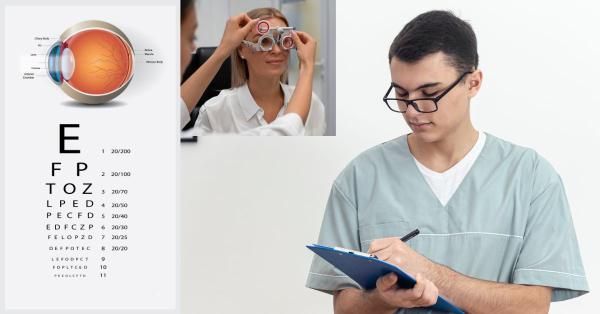
The 6/6 measurement, which is usually determined using a Snellen chart or LED Vision Chart with progressively smaller letters or symbols, indicates that a person can see clearly at six meters what a properly sighted person is anticipated to see at the same distance. In order to assess distance vision, each eye is examined independently while the patient reads the shortest line they can recognize. However, because 6/6 vision does not evaluate problems like eye pressure, retinal health, color vision, or peripheral vision, it simply represents clarity at a distance and does not ensure general eye health.
Process of 6/6 Eye Test
In a visual acuity test, the patient is seated at a standard distance, usually 6 meters or 20 feet. They then cover one eye and read progressively smaller letters or symbols on a Snellen or LogMAR chart until they are no longer able to identify them. The procedure is then repeated for the other eye and occasionally both eyes at once. Traditional printed Snellen or LogMAR charts, as well as advanced digital vision testing methods that show measured optotypes, automatically regulate brightness, randomize letters, and record results specifically, may be utilized. Reliable visual acuity measurements depend on a number of factors, including appropriate lighting in the testing area, accurate chart distance or screen calibration, and the patient's cooperation, focus, and grasp of instructions.
Reliability of the 6/6 Eye Test
A visual acuity test does not assess peripheral vision, depth perception, contrast sensitivity, or other functional components of sight; instead, it examines central visual sharpness, or the capacity to detect fine details directly ahead. The test is quite accurate and dependable for determining distance clarity when carried out under the right circumstances, including standardized chart distance, appropriate lighting, and understandable patient instructions. Human error, such as misreading letters, incorrect examiner advice, dim lighting that reduces contrast, or incorrect chart calibration and positioning, can still have an impact on outcomes. Digital visual acuity systems provide better consistency through controlled brightness, automatic calibration, randomized optotypes, and data recording, lowering variability and improving overall accuracy. Manual tests using printed Snellen or LED Vision Chart rely more on examiner technique and environmental conditions.
Limitations of the 6/6 Eye Test
A typical visual acuity test has a number of limitations, including the inability to identify early retinal disorders like glaucoma or macular degeneration, which frequently manifest before central sharpness is compromised. Additionally, it may not detect issues with night vision or eye muscle imbalances that impair binocular coordination, and it does not evaluate depth perception, contrast sensitivity, or color vision, which are important aspects of overall visual performance. Because a person may still obtain 6/6 vision while feeling visual discomfort, headaches, or eye strain due to underlying abnormalities that the acuity test alone cannot reveal, the test can occasionally be misleading.
Improving Eye Test Accuracy
Digital visual acuity systems that reduce human error through automated calibration, regulated brightness, and randomized optotypes are used to increase the accuracy of visual acuity testing. To prevent inaccurate readings, it is equally crucial to maintain appropriate room illumination and make sure the chart or display is properly calibrated. Tests should only be performed by certified ophthalmologists or optometrists who can correctly interpret the data and adhere to standard operating procedures. Because they offer uniform difficulty, constant letter spacing, and more accurate visual performance assessment, LogMAR charts are recommended for research or clinical applications needing more precise data.
Other Advanced Test for Eye Health
Since visual acuity cannot fully assess eye health, complementary eye exams are necessary. While an OCT eye scan offers thorough imaging of the retina to identify early indicators of illnesses like macular degeneration or diabetic retinopathy, a refraction test establishes the precise lens power required to treat refractive defects like myopia or astigmatism. Tonometry is essential for diagnosing and treating glaucoma, a condition that frequently has no early symptoms. It measures intraocular pressure. A visual field exam also assesses peripheral vision, which can assist detect neurological problems or optic nerve damage that a typical 6/6 acuity test is unable to detect. To thoroughly evaluate both vision quality and ocular health, comprehensive eye exams include visual acuity tests with modern diagnostic techniques. They ensure accurate prescriptions, assistance in the early detection of illnesses, and offer an extensive evaluation that is not possible with just acuity tests.
Although it only provides a partial picture of general eye health, the 6/6 eye test is still a popular and dependable way to evaluate fundamental visual acuity. It should be combined with thorough eye exams that assess peripheral vision, retinal health, eye pressure, and other vital functions in order to fully comprehend and safeguard your vision. Make routine, full-spectrum eye exams a priority to guarantee early problem diagnosis and preserve long-term visual health.
Author's Bio

Mr. Rajender Gupta
(Director, Matronix Optotechnik Pvt. Ltd.)
With a vision to make advanced eye-care technology accessible across India and beyond, the Director of Matronix Optotechnik Pvt. Ltd. has been leading innovation in smart ophthalmic solutions since founding the company in 2019. Building on decades of industry experience and the global legacy of the Matronix brand since 2007, he has transformed the company into a trusted name in precision eye-testing equipment.