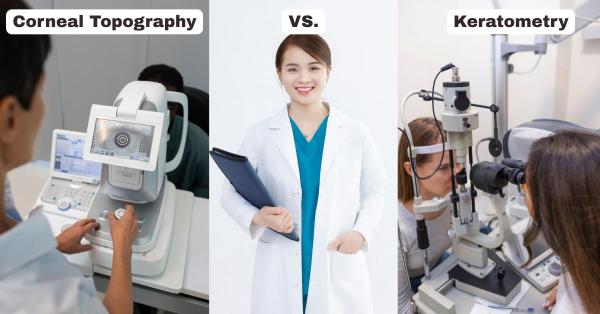
Corneal Topography vs Keratometry: Which Is Better for Astigmatism Testing
Published On: 26/Nov/2025An uneven corneal curvature results in astigmatism, a disorder that causes distorted or blurry vision. To properly diagnose the issue and choose the best course of treatment through eye test machines, corneal curvature must be measured. Keratometry and corneal topography are two important diagnostic techniques used to assess the cornea's shape and find any anomalies that could lead to or affect astigmatism. While corneal topography offers a complete picture of the entire corneal surface for more thorough study, keratometry analyzes the curvature of the center cornea. In order to help readers whether they be patients or eye care specialists understand which approach is more appropriate for obtaining accurate and trustworthy astigmatism testing, this blog will compare the two methods.
Understanding of Astigmatism
The image looks stretched or blurry when light reaching the eye cannot focus evenly on the retina due to an uneven curvature of the cornea or lens. Astigmatism, which causes distorted or blurry vision at different distances, is caused by this uneven concentration. Determining the precise lens prescription or treatment required to appropriately correct the distortion and recover clear vision depends on determining the exact degree and axis of this curvature.
What Is Keratometry?
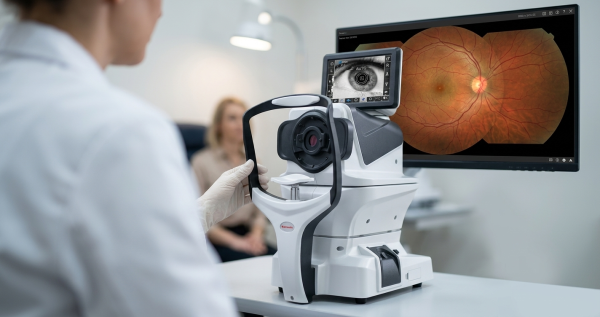
Keratometry is a diagnostic procedure that helps detect astigmatism by measuring the center cornea's curvature using reflected light. It measures how steep or flat the central cornea is by projecting light rings onto the corneal surface and examining the reflection patterns. Both contemporary autorefracto-keratometers and conventional keratometers are used to acquire this measurement. The exam is quick, easy, and especially helpful for contact lens fitting and basic refractive error testing. However, keratometry is limited in its capacity to fully assess complicated corneal forms since it only measures a tiny core region of the cornea, making it unable to identify irregular astigmatism or peripheral corneal deformities.
What Is Corneal Topography?
A computerized imaging examination called corneal topography creates a three-dimensional map of the entire corneal surface, providing a thorough understanding of its curvature and contour. In order to examine even the slightest surface differences, it uses sophisticated scanning devices or reflected light to collect thousands of data points. Placido-disc systems, Scheimpflug imaging equipment, and scanning-slit topographers are examples of common instrumentation. This technique is very useful for planning refractive operations, creating personalized contact lenses, and identifying irregular astigmatism, keratoconus, and corneal deformities following surgery since it offers comprehensive insight into both the central and peripheral cornea. However, compared to simple corneal curvature testing, corneal topography is more costly, necessitates expert operation, and takes a little longer to complete.
Corneal Topography vs Keratometry: Key Differences
The primary distinction between keratometry and corneal topography is the degree of coverage and detail they offer when evaluating corneal curvature. Corneal topography records thousands of data points to create a complete 3D map of the central and peripheral cornea, whereas keratometry simply assesses the central corneal area using basic reflected light patterns. This makes topography much more useful for planning refractive procedures, creating custom lenses, and identifying irregular astigmatism, keratoconus, and post-surgical deformities. Keratometry, on the other hand, is faster, easier, and perfect for simple refractive evaluations; but, it is unable to identify intricate or peripheral corneal abnormalities.
Which Is Better for Astigmatism Testing?
Keratometry offers fast and accurate measurements of the center corneal curvature, making it a good choice for basic astigmatism identification. Corneal topography, on the other hand, is significantly superior for complicated or irregular astigmatism because it provides accurate, thorough data along the entire corneal surface and identifies anomalies that keratometry is unable to identify. Both techniques are frequently combined in clinical practice to ensure the most precise diagnosis and treatment planning: corneal topography for in-depth examination and keratometry for quick preliminary readings.
Future Innovations
Wavefront topography and AI-driven corneal analysis are two recent developments in corneal imaging that offer extremely accurate insights into minor corneal imperfections and vision distortions. In order to improve diagnostic accuracy, clinics are increasingly implementing integrated systems that combine OCT with corneal topography to capture both surface curvature and deeper anterior segment characteristics in a single scan. Furthermore, an increasing trend is the use of portable digital instruments for enhanced corneal mapping, which makes state-of-the-art diagnostics more accessible for distant practice settings and community screenings.
Accurately diagnosing astigmatism requires both keratometry and corneal topography, both of which provide important details about the curvature of the eye. Corneal topography, on the other hand, offers a much sharper and more complete image of the entire cornea, which makes it particularly useful for difficult patients, advanced eye care, and surgical planning. Ask your eye expert to opt for the latest eye test equipment if a corneal topography test is appropriate for you if you have blurry vision or suspect astigmatism.
Author's Bio

Mr. Rajender Gupta
(Director, Matronix Optotechnik Pvt. Ltd.)
With a vision to make advanced eye-care technology accessible across India and beyond, the Director of Matronix Optotechnik Pvt. Ltd. has been leading innovation in smart ophthalmic solutions since founding the company in 2019. Building on decades of industry experience and the global legacy of the Matronix brand since 2007, he has transformed the company into a trusted name in precision eye-testing equipment.