
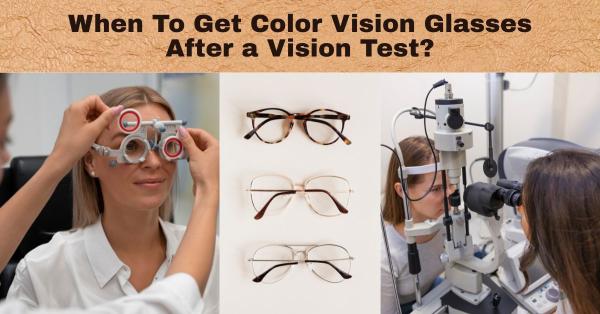
When To Get Color Vision Glasses After a Vision Test?
Published On: 31/Jan/2026Table of Contents
- • What Is a Colour Vision Test?
- • What Are Colour Vision Glasses?
- • What Do Colour Vision Test Results Mean for Glasses?
- • When Should You Consider Colour Vision Glasses?
- • Who Is Most Likely to Benefit from Colour Vision Glasses?
- • Situations Where Colour Vision Glasses May Not Be Suitable
- • Colour Vision Glasses vs Medical Treatment
- • How to Choose the Right Colour Vision Glasses
- • Limitations and Realistic Expectations
Color vision enables the human eye to distinguish and interpret different wavelengths of light, helping us perceive a wide range of colors that are essential for everyday activities like reading signals, choosing clothing, learning, and certain professions. Color vision deficiency, also known as color blindness, is caused by malfunctioning cone cells in the retina, which typically affects the ability to distinguish between red and green shades. Timely color vision testing is essential for accurate diagnosis, career planning, educational assistance, and overall eye health assessment, especially in youngsters and working professionals, even though many persons with color vision deficiency may not be aware of it at an early age. Standardized color vision tests are used in modern eye care procedures to determine the type and severity of deficiencies, enabling eye care providers to provide patients with appropriate counseling. Although there is no permanent cure for color vision impairment, color vision glasses have become a helpful tool that can improve color contrast and discrimination under specific circumstances, improving people's everyday color experiences and boosting their self-esteem without taking the place of appropriate clinical assessment.
What Is a Colour Vision Test?
A color vision test is a specialized eye exam that assesses a person's capacity to correctly recognize and distinguish colors, mainly to determine the existence and kind of color vision impairment. The primary goal of color vision testing is early diagnosis, which is essential for safe performance in tasks requiring color recognition, career eligibility, and educational support. The Farnsworth D-15 or Farnsworth-Munsell 100 Hue Test, which evaluates color discrimination and the degree of deficiency, the Ishihara Test, which uses numbered dot plates to screen for red-green color deficiency, and other arrangement-based tests used in clinical settings are examples of frequently used tests. The outcomes of these tests show whether color vision is normal or impaired, pinpoint the particular kind of color vision impairment, and assist eye care specialists in assessing the severity of the condition so that the patient can receive the proper advice, documentation, and counseling.
What Are Colour Vision Glasses?
By increasing contrast between particular light wavelengths, color vision glasses are specially made eyewear that helps people with color vision deficiencies see colors more clearly. They function utilizing advanced lens filters that selectively block or modify overlapping light wavelengths, minimizing colour confusion particularly between reds and greens and helping the brain to better detect colour distinctions. These glasses can make colors appear brighter, clearer, and more defined in everyday settings by enhancing color separation rather than treating the underlying issue. As a supporting visual aid rather than a medical treatment, color vision glasses come in a variety of styles, including indoor and outdoor models, prescription and over-the-counter alternatives, and lenses designed for particular types of color vision deficiencies.
What Do Colour Vision Test Results Mean for Glasses?
By detecting the kind and severity of color vision loss, color vision test findings assist evaluate if color vision glasses are likely to be helpful. Color vision glasses may increase color contrast and the capacity to discriminate between similar shades in certain lighting circumstances in those with mild to moderate color vision deficiencies, particularly red-green deficiency, the most prevalent type. Although results vary from person to person, people with these results frequently see a discernible increase in their everyday perception of color. However, because the lenses cannot completely compensate for major cone dysfunction, the benefits of color vision glasses may be restricted in cases of blue-yellow deficiency or more severe kinds of color vision deficiency. As a result, test findings help eye care specialists set reasonable expectations and recommend if color vision glasses are a helpful option or whether other coping mechanisms are more suitable.
When Should You Consider Colour Vision Glasses?
After a color vision deficiency has been verified by a qualified color vision test performed by an eye care specialist, color vision glasses should be taken into consideration. They may be especially helpful for persons who encounter regular trouble differentiating certain colours in daily activities such as reading colour-coded information, identifying signals, or choosing matching objects. These glasses may be helpful in enhancing functional color perception for those with occupational or lifestyle issues, such as professionals working in color-dependent workplaces, designers, technicians, or students. Additionally, people who just want to improve their color awareness and visual experience should consider color vision glasses as a helpful tool. However, they should be aware that results vary and that professional advice helps set reasonable expectations.
Who Is Most Likely to Benefit from Colour Vision Glasses?
People with red-green color vision insufficiency are most likely to benefit from color vision glasses since these lenses are made especially to improve contrast between the colors that are most frequently impacted by this disorder. Compared to very young children, adults and older children frequently have more evident functional improvement because they are able to articulate visual changes and adjust to the altered color perception. Additionally, color vision glasses may be especially beneficial in enhancing clarity, confidence, and general visual experience in daily and job situations for those engaged in visually demanding activities like graphic work, technical roles, education, driving, or hobbies that depend on color differentiation.
Situations Where Colour Vision Glasses May Not Be Suitable
People with severe color vision deficiencies may not be able to wear color vision glasses because considerable cone cell dysfunction reduces the ability of lens filters to produce meaningful color separation. Additionally, because most color vision glasses are made primarily to correct red-green color confusion, they are often less successful for blue-yellow color vision deficiencies. Additionally, as the lenses are only meant to improve color contrast and awareness rather than restore normal color vision, anyone who anticipate that these glasses will offer a full "cure" for color blindness may be let down. To guarantee reasonable expectations and suitable visual support in such situations, explicit counseling and alternate coping mechanisms are necessary.
Colour Vision Glasses vs Medical Treatment
Since color vision deficiency is typically caused by genetic or structural problems in the eye's cone cells, which cannot be permanently rectified with lenses, color vision glasses are not a medical remedy. Rather, by increasing color contrast and decreasing color overlap, these glasses serve as a visual aid that makes it easier for some people to recognize particular colors in everyday situations. They do not take the role of thorough eye exams or appropriate color vision testing, which are necessary for appropriate diagnosis, documentation, and advice. In order to determine suitability, set reasonable expectations, and make sure that color vision glasses are utilized as a supportive tool rather than as a replacement for clinical assessment, professional evaluation and counseling by an eye care specialist are required.
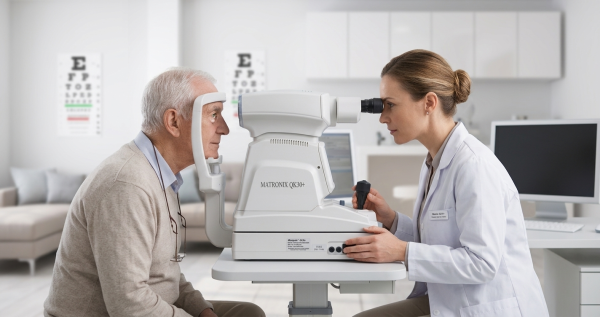
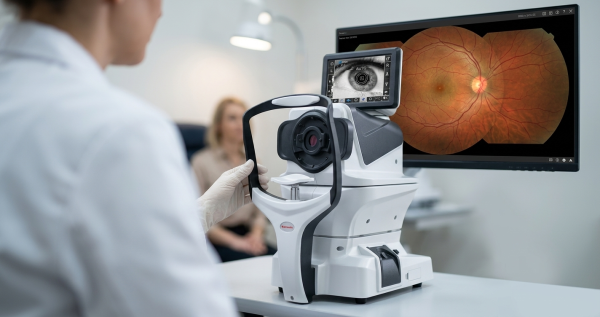
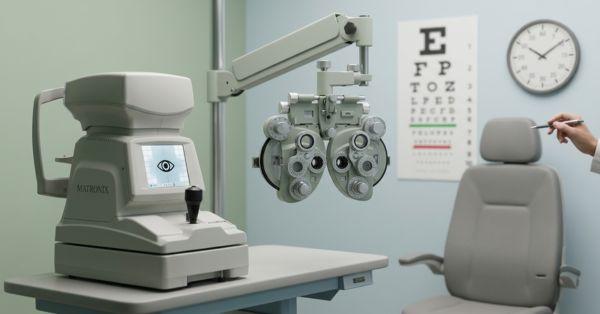
Modern eye clinics conduct colour vision assessments as part of a comprehensive eye examination using advanced Eye Test Machines that evaluate multiple aspects of visual function in a single visit. Along with colour vision testing, instruments such as an Autorefractometer are often used to objectively measure refractive errors, ensuring that reduced colour perception is not influenced by uncorrected vision problems. This integrated approach allows eye care professionals to make accurate diagnoses and provide informed recommendations regarding visual aids, including colour vision glasses.
How to Choose the Right Colour Vision Glasses
Consulting an eye specialist is the first step in selecting the appropriate color vision glasses. Through suitable tests, they can establish the kind and severity of color vision weakness and provide advice on whether glasses are likely to be effective. Users can choose between non-prescription choices for people who do not need vision correction and prescription lenses, which correct refractive problems and improve color, based on their specific visual needs. While outdoor color vision glasses are made to function better in bright sunshine, inside models are geared for controlled lighting environments, therefore usage conditions must also be taken into account. Expert advice guarantees that the chosen glasses meet lifestyle needs and offer a practical, realistic enhancement in color perception.
Limitations and Realistic Expectations
While colour vision glasses might enhance colour perception for certain users, it is necessary to have reasonable expectations and recognize their limitations. Initial colors may appear especially bright or varied during the adjustment period, which is frequently necessary as the brain adjusts to the altered color filtering of the lenses. Depending on the kind and severity of color vision impairment, illumination, and individual visual processing, results can differ greatly from person to person. Even with continuous use, certain scenarios such as low light, complex color patterns, or specific shades may still appear altered or difficult to detect, confirming that these glasses give enhancement rather than complete correction of colour vision.
Making a knowledgeable choice after a colour vision test entails understanding that the results reveal the kind and severity of colour vision deficiencies and help determine if colour vision glasses may be beneficial. A professional eye exam is important because it guarantees an accurate diagnosis, appropriate counseling, and direction on proper visual aids based on personal needs and lifestyle. Although some people find that color vision glasses improve contrast and color awareness, they are not a cure, and results differ from person to person. Setting reasonable expectations and following professional advice allows patients to make confident, well-informed choices about controlling colour vision deficiencies and improving everyday visual experiences.
Author's Bio

Mr. Rajender Gupta
(Director, Matronix Optotechnik Pvt. Ltd.)
With a vision to make advanced eye-care technology accessible across India and beyond, the Director of Matronix Optotechnik Pvt. Ltd. has been leading innovation in smart ophthalmic solutions since founding the company in 2019. Building on decades of industry experience and the global legacy of the Matronix brand since 2007, he has transformed the company into a trusted name in precision eye-testing equipment.

Frequently Asked Questions
Colour vision glasses should be considered only after a colour vision deficiency has been confirmed through a professional colour vision test conducted by an eye care specialist. They are most useful for individuals who experience difficulty distinguishing certain colours in daily life, education, or work-related tasks. A proper diagnosis helps determine whether these glasses are likely to provide functional improvement.
No, colour vision glasses do not cure colour blindness. Colour vision deficiency is usually caused by genetic or structural issues in the eye’s cone cells, which cannot be permanently corrected. These glasses function as a visual aid by enhancing colour contrast and reducing colour overlap, helping some individuals perceive colours more clearly in specific conditions.
People with mild to moderate red-green colour vision deficiency are most likely to benefit from colour vision glasses. Adults and older children often experience better functional improvement because they can adapt more easily and recognise changes in colour perception. Individuals in colour-dependent professions or activities may also find these glasses helpful.
Colour vision glasses are not suitable for everyone. They are generally less effective for severe colour vision deficiencies or blue-yellow colour vision disorders. Since results vary depending on the type and severity of the condition, professional counselling is essential to set realistic expectations and determine whether these glasses are an appropriate option.