
How Does the Ishihara Colour Blindness Test Work
Published On: 21/Dec/2025Table of Contents
- • How Does the Ishihara Color Blindness Test Work?
- • How to Conduct the Ishihara Test
- • Types and Structure of Ishihara Plates
- • What Kinds of Color Blindness Can the Ishihara Test Identify?
- • Step-by-Step: How the Test Is Performed
- • How to Interpret the Results
- • The Ishihara Test's accuracy
- • Ishihara Tests: Digital vs. Book
- • The Ishihara Test: Who Should Take It?
- • Common Misconceptions Regarding the Ishihara Exam
Color blindness, also known as color vision deficiency, is a visual disorder in which a person struggles to differentiate specific colors, most commonly red and green, due to changes in the retina's light-sensitive cells. The Ishihara Test is the most used screening method in the world because of its ease of use, quickness, and demonstrated accuracy in identifying red-green color vision impairments in people of all ages. This blog will describe the Ishihara Test's operation, the kinds of color vision issues it can identify, its limitations and accuracy, and the reasons it is still a reliable first-line screening technique used in eye clinics, educational institutions, and vocational vision evaluations across the globe.
How Does the Ishihara Color Blindness Test Work?
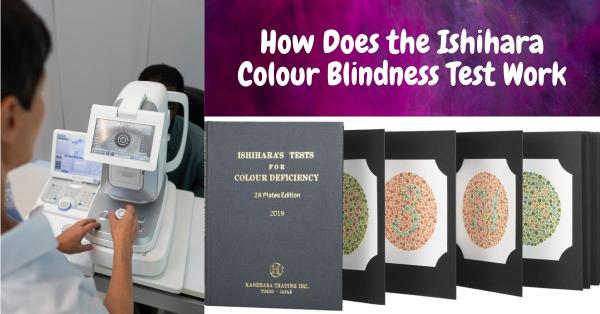
A straightforward and popular vision screening test for red-green color vision deficit is the Ishihara Color Blindness Test. Dr. Shinobu Ishihara, a Japanese ophthalmologist, invented it in 1917. It is made up of a sequence of colored dot plates that form numbers or patterns that are obvious to those with normal color vision but difficult or impossible for those with red-green deficiency to discern. The test is perfect for routine vision exams because its main goal is rapid and efficient screening rather than a thorough diagnosis. It is frequently utilized in eye clinics, hospitals, schools, driver fitness evaluations, and required vision tests for occupations that depend on safety, such as aviation and defense.
How to Conduct the Ishihara Test
The Ishihara Test uses a set of circular pictures called Ishihara plates, which are composed of numerous tiny dots of varying sizes, colors, and brightness. Using particular color combinations that depend on the healthy operation of the eye's cone cells, which are in charge of color perception, numbers, paths, or symbols are concealed within these dots. A person with normal color vision can see contrast and recognize the right pattern, number, or form with ease. However, those who suffer from red-green color vision insufficiency find it difficult to discern these color distinctions, which can lead to them seeing an incorrect number, a different pattern, or even nothing at all.
Types and Structure of Ishihara Plates
Each of the several plate types used in the Ishihara test is intended to show particular patterns of color vision impairment. Transformation plates are designed to show how color perception varies by allowing both those with normal color vision and those with color deficiency to see a number. However, the number appears differently to color-deficient viewers. People with normal color vision can easily see the number on vanishing plates, whereas those with red-green deficiency cannot see any number at all. Hidden digit plates, on the other hand, are made so that individuals with normal color vision cannot see any numbers, but those with color vision impairments can recognize a digit created by particular color contrasts. Lastly, by analyzing consistent response patterns over numerous plates, diagnostic plates assist eye care experts in determining the kind and severity of color vision insufficiency. This makes the test effective for both screening and basic classification of color vision problems.
What Kinds of Color Blindness Can the Ishihara Test Identify?
The most prevalent types of color blindness, Protan defects (red cone deficiency) and Deutan defects (green cone deficiency), can be identified with the Ishihara Color Blindness Test since it is particularly made to detect red–green color vision abnormalities. Eye care specialists can screen for and generally categorize these two diseases by examining how people interpret the numbers and patterns on the plates. Nevertheless, the Ishihara test has limitations and is unable to identify color vision issues brought on by other retinal or optic nerve disorders, total color blindness (achromatopsia), or blue-yellow color vision deficiencies (tritanopia). More sophisticated and thorough color vision tests are needed for these diseases.
Step-by-Step: How the Test Is Performed
It usually takes two to five minutes to complete the Ishihara Color Blindness Test. The patient should be situated at a comfortable viewing distance of roughly 75 to 100 cm from the plates, and the test should be carried out under appropriate, uniformly distributed natural or daylight-equivalent lighting, avoiding glare or tinted light that could change color perception. Without spending a lot of time speculating, the patient is told to recognize the numbers, symbols, or visible lines on each plate in a few seconds. A more extensive 38-plate version of the test, which enables greater assessment of fault type and consistency, or a 24-plate variant, which is frequently used for routine clinical or school screenings, may be used. Traditional printed plates or digital formats on calibrated screens can be used for Ishihara testing; both approaches work well when appropriate lighting, display calibration, and conventional testing procedures are followed.
How to Interpret the Results
The patient's responses are compared to the anticipated responses for each plate in order to interpret the results of the Ishihara test. When a person correctly recognizes most or all of the numbers or patterns within the allotted time, demonstrating consistent and accurate perception throughout the plates, the result is considered normal color vision. When several plates are read wrongly, are not seen at all, or exhibit the same kinds of errors repeatedly in a particular pattern, color vision deficit may be detected. To pass, one must typically properly identify a minimal number of plates, as determined by the test version being utilized; repeated errors beyond this threshold indicate a deficit. To distinguish between Protan and Deutan abnormalities, eye care specialists carefully examine mistake patterns, such as persistent confusion between red and green hues. Additional color vision tests, such as the Farnsworth D-15 or Hardy-Rand-Rittler (HRR) tests, are advised for more accurate evaluation when results are ambiguous, inconsistent, or when exact classification is needed.
The Ishihara Test's accuracy
When used under regulated conditions, the Ishihara Color Blindness Test is thought to be extremely accurate and dependable for identifying deficits in red-green color vision. Its efficiency stems from its capacity to promptly identify recurring color confusion patterns linked to Protan and Deutan flaws. The test does not, however, detect blue-yellow (tritan) color vision problems or other non-red-green anomalies, hence it has obvious limits. External factors that can distort color contrast and produce unreliable results, such as dim or uneven lighting, faded or aging plates, poorly printed copies, and the use of mobile screenshots or uncalibrated digital displays, can also have a significant impact on the accuracy of the Ishihara test. Because of this, reliable screening results depend on carefully printed plates or appropriately calibrated digital equipment.
Ishihara Tests: Digital vs. Book
Clinics, hospitals, and screening programs are increasingly using digital Ishihara color vision tests in addition to traditional book-based versions due to developments in eye care technology. For large-scale or mass vision exams, such those in schools or occupational health settings, digital screening offers a number of benefits, such as the absence of plate fading danger, standardized and controlled lighting conditions, automatic and accurate scoring, and ease of use. Additionally, these technologies lessen examiner bias and increase uniformity. Online or unofficial digital versions of the Ishihara test, however, have significant drawbacks. They are not appropriate for clinical diagnosis since they are frequently seen on uncalibrated screens that are impacted by screen brightness, color settings, ambient lighting, and device quality. Therefore, informal internet tests should be regarded as informational only and should not be used in place of proper eye exams, even though professionally calibrated digital systems are dependable.
The Ishihara Test: Who Should Take It?
For a variety of people where accurate color perception is essential for education, safety, or employment eligibility, the Ishihara Color Blindness Test is advised. While drivers are frequently evaluated to make sure they can correctly identify traffic signals and signs, students may take the test as part of regular school vision screenings to detect color vision impairments early. Pilots and applicants for positions in the military, naval, aviation, and railroad industries, where color discrimination is a legal requirement, should pay particular attention. Given that color blindness is frequently inherited, the test is also recommended for those with a family history of the disorder. Additionally, as part of a more comprehensive eye examination, individuals with visual abnormalities brought on by optic nerve or retinal problems may undergo Ishihara testing, which aids eye care specialists in determining whether color vision is impacted and whether additional diagnostic testing is required.
Common Misconceptions Regarding the Ishihara Exam
The Ishihara Color Blindness Test is associated with a number of beliefs that frequently cause confusion regarding color vision impairment. One widespread misconception is that "you can train to pass the test," but in actuality, memorization of plates does not alter how the eyes and brain interpret color; rather, the test is intended to demonstrate natural color perception. The idea that "color blind people see only in black and white" is another myth. In reality, most people with color vision deficiencies see colors, but they have trouble differentiating between certain tints, particularly reds and greens. Additionally, there is the misconception that "wearing special glasses cures color blindness." In reality, while these glasses may improve color contrast in specific circumstances, they do not treat or cure the underlying problem. Because it assesses actual color discrimination rather than taught responses or transient visual assistance, the Ishihara test is still useful.
In conclusion, the Ishihara Color Blindness Test is a fast and accurate screening method for red-green color vision impairments because it uses specifically made color dot plates to evaluate how the eyes and brain interpret color patterns. In addition to assuring safety in occupations where exact color recognition is important, early detection of color blindness is needed for helping people adjust to daily life, education, and career planning. Online versions may increase awareness, but tests performed in a professional eye care facility with the most up-to-date eye test equipment under controlled lighting circumstances yield the most accurate and reliable findings. The best way to receive clear and confident vision care is to schedule an Ishihara test with a skilled eye care expert if you suspect a color vision problem or need certification for academic or professional reasons.
Author's Bio

Mr. Rajender Gupta
(Director, Matronix Optotechnik Pvt. Ltd.)
With a vision to make advanced eye-care technology accessible across India and beyond, the Director of Matronix Optotechnik Pvt. Ltd. has been leading innovation in smart ophthalmic solutions since founding the company in 2019. Building on decades of industry experience and the global legacy of the Matronix brand since 2007, he has transformed the company into a trusted name in precision eye-testing equipment.

Frequently Asked Questions
The Ishihara Colour Blindness Test is used to screen for red–green colour vision deficiencies, specifically Protan (red cone deficiency) and Deutan (green cone deficiency). It is widely used in eye clinics, schools, hospitals, and occupational vision screenings because it is quick, simple, and highly reliable for initial detection.
The test usually takes 2 to 5 minutes. The patient views a series of coloured dot plates from a distance of about 75–100 cm under proper lighting and identifies numbers, symbols, or paths within a few seconds per plate. The test can be conducted using printed plates or professionally calibrated digital systems.
No. The Ishihara test is designed specifically to detect red–green colour vision deficiencies. It cannot reliably identify blue–yellow (tritan) deficiencies, total colour blindness (achromatopsia), or colour vision loss caused by retinal or optic nerve disorders. Additional tests like Farnsworth D-15 or HRR are required for comprehensive diagnosis.
Informal online Ishihara tests are not fully reliable because screen calibration, brightness, ambient lighting, and device quality can affect colour perception. For accurate results and certification purposes, the test should be performed using properly printed plates or calibrated digital equipment in a professional eye care setting.