
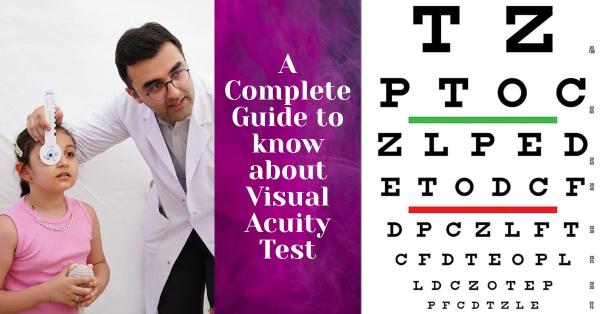
A Complete Guide to know about Visual Acuity Test
Published On: 23/Dec/2025Table of Contents
- • A Visual Acuity Test: What Is It?
- • What Is Measured by Visual Acuity?
- • How Vision Is Assessed: Interpreting the Numbers
- • Visual Acuity Test Types
- • How Do Visual Acuity Tests Get Done?
- • How Does Your Visual Acuity Change?
- • Comprehending Your Results
- • Who Needs to Take a Test of Visual Acuity?
- • How frequently should you be tested?
- • Digital Visual Acuity Systems' Advantages
- • Common Misconceptions Regarding Visual Acuity
The ability to detect fine details at a particular distance, such as reading letters on an eye chart, is referred to as visual acuity. In addition to helping identify common vision issues like nearsightedness, farsightedness, and astigmatism, measuring visual acuity is important because it provides a basic measure of overall visual performance in everyday tasks like reading, driving, and facial recognition. This guide will explain what visual acuity is, how it is tested during an eye exam, what common test results, such as 6/6 or 20/20, suggest, the factors that can impair vision clarity, and the importance of routine visual acuity testing for preserving eye health.
A Visual Acuity Test: What Is It?
A visual acuity test is a straightforward eye test that assesses your ability to see items at a specific distance with clarity and sharpness. It typically involves reading letters, numbers, or symbols on an eye chart. This test's primary goals are to assess your eyes' ability to focus and detect typical vision issues including blurring near or distance vision. A visual acuity test just assesses vision clarity and does not detect eye problems on its own, in contrast to a full eye examination, which additionally assesses eye health, eye pressure, eye muscles, and the retina.
This exam is necessary for seniors (to track age-related changes in vision), children (to identify vision problems early), adults (for job and daily activities), and drivers (where clear vision is important).
What Is Measured by Visual Acuity?
The sharpness and clarity of vision, or the ability of the eyes to see minute details, is measured by visual acuity. It evaluates a person's ability to clearly recognize shapes, letters, numbers, or symbols, typically at a standard distance that indicates how well the eye focuses light onto the retina. Since both can be impacted differently by vision issues, visual acuity testing also aids in differentiating between near clarity (such as reading a book or cell phone) and distance clarity (such as reading a road sign from a distance). Common results like 6/6 or 20/20 indicate normal vision, which means the person can see at 6 meters (or 20 feet) what a person with standard vision should see at that distance. However, values like 6/9 or 6/12 indicate reduced sharpness, where the person needs to be closer to see the same detail, assisting eye care professionals in determining the degree of visual clarity and need for correction.
How Vision Is Assessed: Interpreting the Numbers
The purpose of vision measurement numbers is to display an individual's level of vision in relation to normal vision. 6/6 vision, which is regarded as typical visual acuity, is the ability to see clearly at a distance of six meters what a person with standard vision is anticipated to perceive at that same distance. This is referred to as "20/20 vision" in nations that use feet rather than meters, and it means "clear, normal distance vision at 20 feet." Reduced visual acuity is shown by measurements like 6/9, 6/12, or 6/18, which signify you have to stand closer (6 meters) to see what someone with normal vision could see from 9, 12, or 18 meters away. A thorough eye examination is necessary when findings are below normal since poor visual acuity may indicate uncorrected refractive abnormalities such as nearsightedness or farsightedness, eye strain, or in certain circumstances underlying eye health issues.
Visual Acuity Test Types
Visual acuity tests come in a variety of forms, each appropriate for a particular patient population and set of demands. The most popular is the Snellen Chart, which measures distance vision using rows of letters that get smaller in size. It is easy to use and popular, but its accuracy and consistency are limited. Often utilized in medical facilities and research environments, the LogMAR Chart provides a more accurate and scientific measurement with consistent spacing and scoring for reliable evaluation. The Tumbling E Chart measures eyesight using the direction of the letter "E" rather than letters and is intended for patients who are illiterate or young children. In a similar vein, the Landolt C Chart asks patients to determine the orientation of a gap in a circular shape in order to gauge visual resolution. In order to assess performance for tasks at close range, near visual acuity tests concentrate on reading vision. With its continuous screen brightness, automated scoring, many optotype possibilities, and improved accuracy, modern digital visual acuity systems combine clinical precision with technology, making them particularly useful for routine and large-scale vision tests.
How Do Visual Acuity Tests Get Done?
To specifically evaluate the sharpness of vision, a visual acuity test is carried out in a straightforward, methodical manner. For distance vision testing, the patient is placed at a standard distance, often three or six meters from the eye chart. To assess individual eye performance, each eye is examined separately while the other is covered. A pinhole device may be used in some situations to help differentiate between refractive defects and other visual problems and to temporarily increase focus. Usually taking only a few minutes to finish, the test is non-invasive and doesn't require pupil dilation for this simple evaluation. In order to assess visual acuity, the examiner gives the patient instructions to read letters, numerals, or symbols in progressively lower sizes. The smallest line that can be accurately read is then recorded.
How Does Your Visual Acuity Change?
Visual acuity, or how well a person sees, can be influenced by a number of things. Blurred vision results from refractive defects such myopia (nearsightedness), hyperopia (farsightedness), and astigmatism, which alter how light focuses on the retina. By altering the lens, cornea, or retina, eye conditions such cataracts, keratoconus, and macular degeneration can also impair clarity. Lighting conditions are important; it can be challenging to see tiny details in faint, excessively bright, or uneven light. Incorrect or out-of-date corrective glasses may not adequately correct vision, resulting in blurry or distorted vision, while fatigue, eye strain, or extended screen time might momentarily compromise visual acuity. Frequent eye exams guarantee the best possible visual acuity and assist in identifying these concerns.
Comprehending Your Results
Knowing the results of a visual acuity test enables you to assess the clarity and health of your eyesight. The usual measurement for normal vision is 6/6 (or 20/20), which indicates that you can see well at a standard distance what a person with normal vision should see. Results like 6/9, 6/12, or 6/18, which suggest that objects appear less crisp and may require closer inspection to see details properly, are indicative of mild or moderate vision loss. These findings may lead to the prescription of glasses or corrective lenses to enhance vision, particularly if refractive problems such as myopia, hyperopia, or astigmatism are found. Your eye care provider may suggest additional tests, such as retinoscopy, refraction, or OCT scans, to get a thorough evaluation of eye health and guarantee accurate diagnosis and treatment if the visual acuity test reveals odd patterns, inconsistent results, or possible underlying eye conditions.
Who Needs to Take a Test of Visual Acuity?
To guarantee clear and healthy vision, a visual acuity exam is vital for a variety of individuals. Regular school vision examinations are beneficial for kids because they can identify early refractive problems and prevent learning challenges. To prevent eye strain and sustain productivity, working professionals should keep an eye on their eyesight, particularly if they spend a lot of time using computers or other digital devices. Regular testing is esential since drivers and pilots need to have excellent vision for both safety and legal needs. Regular evaluations can identify changes in vision early since those with diabetes or hypertension are more likely to experience ocular issues. Because age-related eye diseases like cataracts or macular degeneration can gradually impair vision, seniors should have regular exams. A visual acuity test should also be performed on anyone who has blurry vision, trouble focusing, or changes in visual clarity in order to detect possible issues and obtain prompt remedial action.
How frequently should you be tested?
Age, risk factors, and general eye health all affect how frequently visual acuity tests should be performed. Since children's vision develops quickly and early detection of refractive defects or other problems is critical for learning and development, annual exams should be performed. Every one to two years, those with healthy eyes and no known vision issues should undergo an eye checkup to keep an eye out for any subtle changes in vision. Since the risk of age-related diseases including cataracts, glaucoma, and macular degeneration rises with age, seniors are advised to have their vision tested once a year. People with high-risk illnesses, like diabetes, hypertension, or a family history of eye disease, should adhere to a regimen suggested by their eye care specialist. This regimen may include more frequent evaluations to guarantee prompt identification and treatment of possible vision issues.
Digital Visual Acuity Systems' Advantages
Digital visual acuity systems are a recommended replacement for conventional Snellen charts due to their many advantages for contemporary eye care procedures. They reduce human error and guarantee dependable findings by offering precise and consistent measures of visual acuity. These solutions reduce variability brought on by ambient light or fading printed charts thanks to standardized illumination and calibrated displays. They enable testing for all patient groups, including youngsters and patients who are illiterate, by supporting a variety of optotypes, including letters, numbers, symbols, and tumbling E or Landolt C charts. In addition to providing a better patient experience with clear images and interactive interfaces, digital solutions are especially helpful for busy clinics since they allow for speedier testing and automated record-keeping. These benefits explain why many clinics are switching from paper charts to digital ones, which will increase the effectiveness, precision, and general caliber of eye care services.
Common Misconceptions Regarding Visual Acuity
Misconceptions regarding eye health can result from a number of fallacies regarding visual acuity. The idea that "if I have 6/6 vision, my eyes are perfect" is a prevalent myth. Although 6/6 implies crisp distant vision, it does not ensure general eye health or rule out disorders like glaucoma, cataracts, or retinal problems. Another misconception is that "visual acuity and eye power are the same thing." In actuality, eye power (refractive error) reflects the amount of correction required to properly focus light on the retina, whereas visual acuity assesses the clarity of vision. Some people think that "only older people need eye tests," however in order to identify early vision issues or track changes, children and adults should also have routine examinations. Lastly, the notion that "screens permanently damage visual acuity" is untrue; extended screen time may result in transient dry eyes or eye strain, but it does not permanently impair vision clarity. The best method to keep your vision healthy is still to get regular eye checkups.
Maintaining clear and healthy vision, accurately detecting refractive problems, and early detection of possible eye disorders all depend on employing eye test machines to check visual acuity. Frequent examinations with these devices help track changes that can point to underlying eye conditions and enable prompt correction with spectacles or contact lenses. People of all ages can safeguard their long-term eye health, avoid preventable vision issues, and guarantee optimal visual performance for daily life, work, and safety by making routine evaluations with contemporary eye test machines a priority.
Author's Bio

Mr. Rajender Gupta
(Director, Matronix Optotechnik Pvt. Ltd.)
With a vision to make advanced eye-care technology accessible across India and beyond, the Director of Matronix Optotechnik Pvt. Ltd. has been leading innovation in smart ophthalmic solutions since founding the company in 2019. Building on decades of industry experience and the global legacy of the Matronix brand since 2007, he has transformed the company into a trusted name in precision eye-testing equipment.
Related Posts


Frequently Asked Questions
A visual acuity test measures how clearly a person can see objects at a specific distance by identifying letters, numbers, or symbols on an eye chart. It is important because it helps detect common vision problems such as nearsightedness, farsightedness, and astigmatism, and provides a basic assessment of visual performance for everyday activities like reading, driving, and recognizing faces.
A result of 6/6 (or 20/20) indicates normal distance vision, meaning a person can see clearly at a standard distance what someone with normal vision is expected to see. Measurements such as 6/9 or 6/12 indicate reduced visual clarity, where the person needs to be closer to see the same detail, often suggesting the need for corrective lenses or further eye evaluation.
During a visual acuity test, the patient stands at a fixed distance from an eye chart and is asked to read letters or symbols that decrease in size. Each eye is tested separately while the other is covered. The test is quick, non-invasive, and helps determine the smallest line that can be read accurately to assess vision sharpness.
The frequency of visual acuity testing depends on age and eye health. Children should be tested annually, adults with no vision issues every one to two years, and seniors once a year due to age-related vision changes. People with conditions like diabetes or a family history of eye disease may need more frequent examinations as recommended by an eye care professional.