OCT Eye Tests Revolutionize Early Eye Diseases Detection
Published On: 25/Nov/2025An OCT (Optical Coherence Tomography) eye test is a safe imaging process that uses light waves to make entire cross-sectional scans of the retina, allowing eye specialists to detect minor changes long before symptoms develop, utilizing a specialized eye test machine. OCT is essential for preventing preventable vision loss since it allows for the early detection of diseases like glaucoma, diabetic retinopathy, and macular degeneration. Advanced imaging technologies like OCT have revolutionized diagnosis as modern eye care continues to progress, providing quicker, clearer, and more accurate insights into retinal health.
What Is an OCT Eye Test?
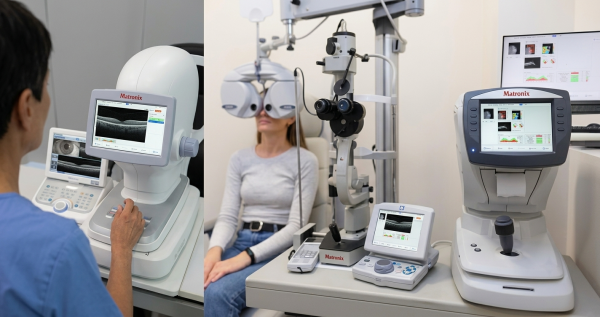
A non-invasive imaging method called OCT (Optical Coherence Tomography) creates high-resolution cross-sectional images of the retina using light waves in order to diagnose eye problems early. OCT produces high-resolution, cross-sectional images of the retina by shining harmless light waves into the eye and measuring how they move back, revealing details that are not visible during a routine examination. OCT offers layered, microscopic pictures of retinal structures for significantly more accurate diagnosis than conventional techniques like fundus photography, which only records surface-level images, or slit-lamp tests, which depend on visual assessment. Patients just need to look at a target light while the scanner takes comprehensive pictures in a matter of seconds. The process is entirely non-invasive and painless, requiring no contact with the eye.
How OCT Technology Works
A sharply focused beam is directed into the eye during an OCT scan, and the instrument detects the reflected signals to capture cross-sectional "slices" of the retina, enabling micrometer-level visualization of each layer. Usually, the system consists of a scanning laser that projects the light, extremely sensitive optical sensors that pick up the signals that return, and specialized image processing software that creates detailed images from these reflections. Both 2D scans for fast sectional views and 3D volumetric imaging, which provides a complete map of the retina, can be produced by modern OCT. 3D OCT is particularly helpful for tracking the course of a disease, keeping track of treatment results, and identifying minute structural alterations that might go unnoticed with standard 2D imaging.
Eye Diseases Detectable Through OCT
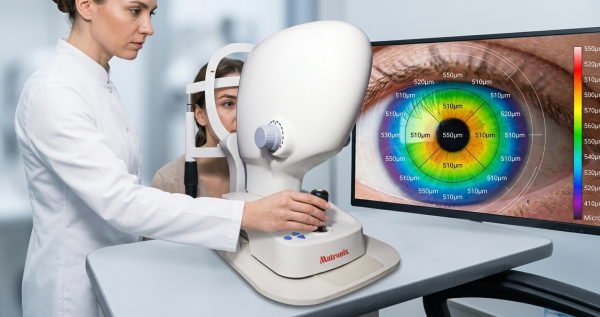
OCT is useful in identifying and tracking severe eye disorders because it provides detailed, layer-by-layer retinal and optic nerve scans. It assesses the thickness of the retinal nerve fiber layer (RNFL) and optic nerve fibers in glaucoma, assisting in the early detection of damage. OCT shows any fluid or swelling under the retina, drusen deposits, and early macular alterations associated with age-related macular degeneration (AMD). It detects retinal edema, microaneurysms, and structural damage from blood vessel leakage in diabetic retinopathy. By vividly displaying distortions or separations within the retinal layers, OCT additionally helps in the detection of macular edema and retinal detachment. Besides the retina, anterior segment OCT is utilized to evaluate the cornea and lens, enabling studies of corneal thickness, angle assessments for glaucoma therapy, and cataract evaluations.
Key Advantages of OCT in Early Detection
OCT provides high-resolution imaging that shows minute structural alterations in the retina and optic nerve, enabling eye doctors to identify illnesses early on, frequently before any symptoms manifest. Additionally, this degree of detail enables accurate tracking of a condition's development over time, assisting medical professionals in determining whether it is stable, getting better, or getting worse. Using clear and accurate data, OCT allows for more prompt and effective treatment options, lowering the risk of irreversible vision damage and improving long-term eye health results.
Role of OCT in Modern Eye Care Clinics
In order to promote quicker analysis, automatic abnormality diagnosis, and seamless long-term monitoring of retinal health, modern eye care increasingly incorporates OCT with digital patient data and AI-driven diagnostic tools. For high-risk populations like diabetic patients, the elderly, and people with a family history of glaucoma, routine OCT screening is particularly beneficial since it can identify early abnormalities that could otherwise go undetected. Furthermore, OCT is an important instrument in the management of complete eye care since it is frequently utilized in both before and after treatment evaluations, whether evaluating baseline retinal health before treatments or monitoring healing and treatment efficiency afterwards.
Future of OCT Technology
Recent advances in OCT technology include swept-source OCT, which allows for deeper and more quick scanning, and OCT angiography, which depicts retinal blood flow without the use of dye injections, as well as AI-driven analysis, which improves diagnostic accuracy and speed. Additionally, the availability of portable and handheld OCT devices is rising, enabling community-level screenings and expanding access to early diagnosis of eye diseases. OCT data can now be used to anticipate disease progression with regard to the increasing use of predictive analytics, which enables more proactive management of eye health and individualized treatment planning.
By offering unmatched insights into retinal and optic nerve health, OCT testing using latest eye test equipment has transformed preventive eye care by allowing eye experts to identify disorders long before symptoms appear and take action before irreversible harm happens. Regular OCT examinations have become essential for preserving long-term, complete visual health as eye disorders including glaucoma, diabetic retinopathy, and macular degeneration grow becoming more common. See your eye expert for an OCT exam right now. Early detection saves vision.
Author's Bio

Mr. Rajender Gupta
(Director, Matronix Optotechnik Pvt. Ltd.)
With a vision to make advanced eye-care technology accessible across India and beyond, the Director of Matronix Optotechnik Pvt. Ltd. has been leading innovation in smart ophthalmic solutions since founding the company in 2019. Building on decades of industry experience and the global legacy of the Matronix brand since 2007, he has transformed the company into a trusted name in precision eye-testing equipment.