
What Is an Eye Test Chart? A Complete Guide for Eye Care Professionals
Published On: 01/Jul/2026Table of Contents
- • What Is an Eye Test Chart?
- • What are the Types of Eye Test Charts?
- • Snellen Eye Chart
- • LogMAR (ETDRS) Eye Chart
- • Tumbling E Chart
- • Landolt C Chart
- • Lea Symbols Chart
- • Jaeger Near Vision Chart
- • What is the difference between Digital and Traditional Eye Test Charts?
- • Why Is an Eye Test Chart Important?
- • What is the procedure of an Eye Test Chart?
- • Before the Test
- • During the Test
- • After the Test
- • Understanding Your Results
- • What Is Examined During an Eye Test Chart Examination?
- • Distance Vision
- • Near Vision
- • Visual Acuity of Each Eye
- • Binocular Vision
- • Vision with Corrective Lenses
- • Changes in Vision
- • Are There Any Risks of an Eye Test Chart Examination?
- • What are the Benefits of an Eye Test Chart?
- • Fast and Non-Invasive
- • Accurate and Standardized Vision Assessment
- • Suitable for Adults and Children
- • Supports Preventive Eye Care
- • Easy to Integrate into Routine Eye Examinations
- • What are the Limitations of an Eye Test Chart?
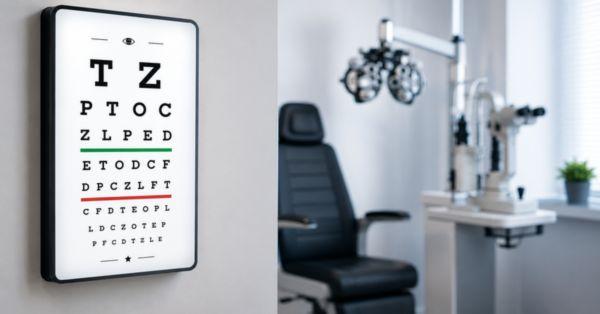
A common instrument for assessing a person's visual acuity and clarity at particular distances is an eye test chart. By assisting eye care specialists in identifying vision issues early on and tracking changes in vision over time, it plays an important role in routine eye exams. Eye test charts allow proper diagnosis, timely therapy, and better patient care whether they are utilized in clinics, hospitals, or optical shops.
What Is an Eye Test Chart?
An eye test chart is a commonly used vision testing instrument that determines visual acuity, or how clearly a person can see items at a given distance.
Patients are required to recognize optotypes during the test, which can be letters, numbers, symbols, or shapes that progressively get smaller. An eye test chart simply evaluates visual acuity and does not offer a comprehensive assessment of eye health, even while it helps identify vision issues like refractive errors and tracks changes in eyesight.
Additional diagnostic tests are part of a thorough eye examination to look at the eye's anatomy and find problems such as glaucoma, cataracts, and retinal disorders.
What are the Types of Eye Test Charts?
In order to meet diverse age groups, literacy levels, and clinical needs, eye test charts are offered in a variety of styles as follows:
Snellen Eye Chart
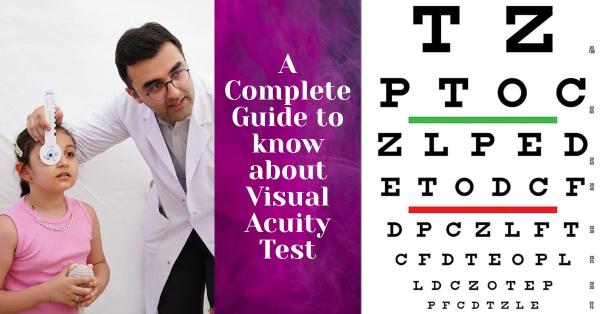
The Snellen Eye Chart is a particularly popular tool for assessing visual acuity at distance. By using rows of letters that get smaller from top to bottom, eye care specialists can assess a patient's vision clarity at a typical testing distance.
LogMAR (ETDRS) Eye Chart
When assessing visual acuity, the LogMAR (ETDRS) Eye Chart offers a more accurate and consistent approach than the Snellen chart. It is frequently used in clinical research, hospitals, and specialty eye care practices because it has an equal amount of letters on each line and uniform spacing.
Tumbling E Chart
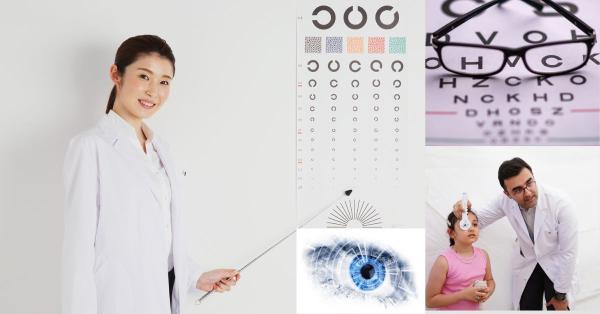
The Tumbling E Chart utilizes the letter "E" in different positions instead of a series of letters. This chart is perfect for small children, those who cannot read, or people who are not familiar with alphabets because patients can choose which way the "E" faces.
Landolt C Chart
A ring with a tiny gap that appears in various locations is a feature of the Landolt C Chart. This chart is a dependable method for evaluating visual acuity regardless of language or literacy ability because patients identify the direction of the gap throughout the test.
Lea Symbols Chart
Simple symbols like a house, apple, square, and circle are used in place of letters in the Lea Symbols Chart. It is specifically made for preschoolers and others who are unable to distinguish letters, allowing for accurate vision evaluation in pediatric eye care.
Jaeger Near Vision Chart
Patients are asked to read paragraphs written in progressively smaller font on the Jaeger Near Vision Chart in order to assess their near visual acuity. During normal eye exams, it is frequently used to evaluate reading vision and identify disorders like presbyopia.
What is the difference between Digital and Traditional Eye Test Charts?
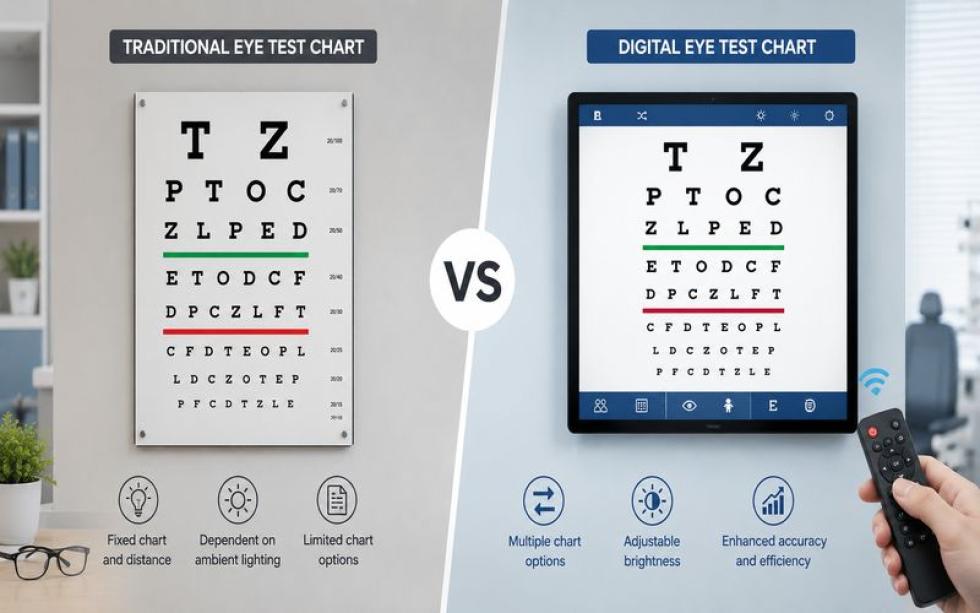
Traditional eye test charts, which are printed and posted on a wall, have been commonly used for decades to evaluate visual acuity. Although they are dependable for routine vision screening, they have minimal adaptability and need fixed testing conditions and constant lighting.
On the other hand, optotypes are shown on high-resolution displays in digital eye exam charts, which enable eye care practitioners to change between chart types, select random optotypes to avoid memorization, and modify brightness for more uniform testing.
In modern-day eye clinics, digital LED vision charts are increasingly being used because they enhance patient satisfaction, testing accuracy, and efficiency. Numerous systems are appropriate for a variety of clinical applications because they provide numerous chart layouts, pediatric eye exams, remote control operation, and configurable testing choices. Their sophisticated features guarantee accurate and consistent visual acuity tests while streamlining operations.
Why Is an Eye Test Chart Important?
One of the most essential tools for assessing visual acuity and spotting vision issues early on is an eye exam chart. It enables early intervention before vision problems interfere with day-to-day activities by assisting eye care specialists in identifying refractive issues such as myopia, hyperopia, astigmatism, and presbyopia. The test helps track changes in vision over time and evaluate the performance of corrective lenses or continuing treatment by offering a standardized measurement of eyesight.
Hospitals, eye clinics, optical shops, schools, and community vision screening programs all frequently use eye test charts for routine eye exams. The chart acts as the initial stage in comprehensive eye care by identifying when further diagnostic testing may be required, even though it cannot diagnose eye illnesses on its own. Because of this, visual acuity testing is necessary for preserving eye health and allowing thorough diagnosis and treatment planning.
What is the procedure of an Eye Test Chart?
Before the Test
You may be checked both with and without your corrective lenses, however the eye care specialist will ask you to take off your glasses if needed before the examination. To guarantee an accurate assessment of your visual acuity, you will be placed in a well-lit area at the proper distance from the eye test chart.
During the Test
You will be required to read the smallest characters, numbers, or symbols you can see on the chart while covering one eye at a time. The brief, painless, and non-invasive examination enables the eye care specialist to assess your close or distance vision clarity.
After the Test
After the test is over, each eye's readings are recorded independently and, if necessary, with corrective lenses. Your eye care specialist may suggest more vision tests or a thorough eye examination to identify the underlying cause if decreased visual acuity is found.
Understanding Your Results
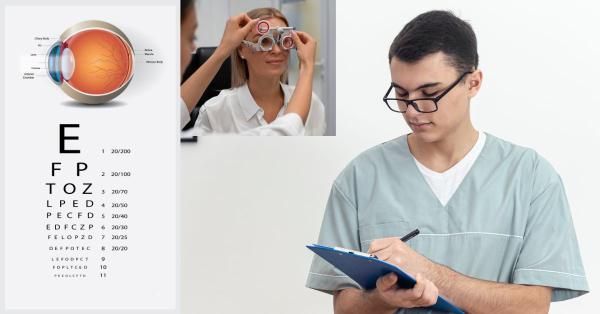
The results of an eye test chart show how well you can see at a normal distance, with a score of 20/20 (or 6/6 in metric units). Lower scores may indicate refractive disorders or other vision issues that call for corrective lenses or additional diagnostic testing, whereas normal findings indicate acceptable visual acuity.
What Is Examined During an Eye Test Chart Examination?
By assessing visual acuity, an eye test chart examination assesses a person's ability to see clearly at various distances. It helps eye care specialists uncover vision issues and decide whether more eye exams are necessary by evaluating each eye's sharpness of vision, both with and without corrective lenses.
Distance Vision
The patient is asked to read optotypes on the eye test chart from a standard distance in order to evaluate distance vision. This helps in determining how well they can see distant objects.
Near Vision
A near vision chart held at a comfortable reading distance is used to assess near vision. It aids in identifying presbyopia-related challenges with close-up tasks like reading.
Visual Acuity of Each Eye
One eye is covered while the other is evaluated independently. This enables the eye care specialist to identify one-sided vision issues and notice differences in vision between the two eyes.
Binocular Vision
Both eyes are evaluated collectively to see how well they function as a team after each eye has been tested separately. This aids in finding problems with overall visual function and eye coordination.
Vision with Corrective Lenses
The test may be redone while the patient is wearing glasses or contact lenses. This assesses the performance of the present prescription and measures the best corrected visual acuity (BCVA).
Changes in Vision
To track changes in visual acuity over time, the results are compared to those of earlier eye exams. Early detection of changes assists in determining whether additional diagnostic testing or a new prescription is required.
Are There Any Risks of an Eye Test Chart Examination?
With no direct contact with the eyes and almost no risks, an eye test chart examination is a non-invasive, painless, and safe technique. However, the accuracy of the results may be impacted by things like inadequate illumination, the wrong testing distance, patient weariness, or trouble focusing.
The eye care specialist may suggest more eye exams to find the underlying problem and choose the best course of action if the test shows abnormal vision or decreased visual acuity.
What are the Benefits of an Eye Test Chart?
Following are the benefits of eye test chart:
Fast and Non-Invasive
There is no physical contact with the eyes during an eye test chart examination, which is quick to complete. Because the process is painless, it can be used for routine eye exams.
Accurate and Standardized Vision Assessment
Under regulated testing conditions, eye test charts offer a reliable way to measure visual acuity. This makes it possible to track vision over time and helps guarantee accurate findings.
Suitable for Adults and Children
Patients of all ages and literacy levels can use several kinds of eye test charts. Because of this, visual acuity testing is useful for both adult and kid's eye treatment.
Supports Preventive Eye Care
Frequent eye chart exams assist in detecting frequent refractive problems and changes in vision before they have an impact on day-to-day functioning. Timely intervention and suitable vision correction are made possible by early identification.
Easy to Integrate into Routine Eye Examinations
In clinics, hospitals, schools, and optical shops, eye test charts are a common component of thorough eye exams. They offer a brief preliminary evaluation to assist in determining whether additional diagnostic testing is required.
What are the Limitations of an Eye Test Chart?
Although eye test charts are a vital tool for assessing visual acuity, they are not without limits. They cannot diagnose eye conditions like glaucoma, cataracts, macular degeneration, or retinal problems on their own; they can only determine a person's visual acuity.
Factors including patient involvement, light level, testing distance, and exhaustion may all have an impact on the accuracy of the results. Visual acuity testing should be used in combination with thorough ocular examinations and diagnostic tools including fundus cameras, slit lamps, autorefractors, and OCT systems for a comprehensive evaluation of eye health.
Author's Bio

Mr. Rajender Gupta
(Director, Matronix Optotechnik Pvt. Ltd.)
With a vision to make advanced eye-care technology accessible across India and beyond, the Director of Matronix Optotechnik Pvt. Ltd. has been leading innovation in smart ophthalmic solutions since founding the company in 2019. Building on decades of industry experience and the global legacy of the Matronix brand since 2007, he has transformed the company into a trusted name in precision eye-testing equipment.
Frequently Asked Questions
An eye test chart is used to measure visual acuity and determine how clearly a person can see at specific distances. It helps eye care professionals identify vision problems such as myopia, hyperopia, astigmatism, and presbyopia during routine eye examinations.
The most commonly used eye test charts include the Snellen Eye Chart, LogMAR (ETDRS) Chart, Tumbling E Chart, Landolt C Chart, Lea Symbols Chart, and Jaeger Near Vision Chart. Each chart is designed for different patient groups and clinical requirements.
Digital eye test charts offer several advantages over traditional printed charts, including adjustable brightness, multiple chart formats, randomized optotypes, and improved testing consistency. These features help enhance testing accuracy and efficiency in modern eye care practices.
No, an eye test chart only measures visual acuity and cannot diagnose eye diseases such as glaucoma, cataracts, macular degeneration, or retinal disorders. A comprehensive eye examination with additional diagnostic tests is required to evaluate overall eye health.