
Refraction Test: Procedure, Types, Importance, & more
Published On: 26/Jul/2026Table of Contents
- • What Is a Refraction Test?
- • What are the types of Refraction Tests?
- • Subjective Refraction
- • Objective Refraction (Autorefraction)
- • Retinoscopy
- • Cycloplegic Refraction
- • Why Is a Refraction Test Important?
- • How Is a Refraction Test Performed?
- • Before the Test
- • During the Test
- • After the Test
- • What Do Refraction Test Results Mean?
- • What are Conditions Diagnosed Through a Refraction Test?
- • Myopia (Nearsightedness)
- • Hyperopia (Farsightedness)
- • Astigmatism
- • Presbyopia
- • What are Benefits of a Refraction Test?
- • What are the risks and limitations of a Refraction Test?
- • Risks of a Refraction Test
- • Limitations of a Refraction Test
A refraction test is a normal eye test that measures how light bends as it passes through the eye, which assists in the detection of refractive defects such as myopia (nearsightedness), hyperopia (farsightedness), astigmatism, and presbyopia. It is one of the most widely used eye exams because it correctly estimates the prescription required for glasses or contact lenses.
What Is a Refraction Test?
A refraction test is a standard eye exam that evaluates how light is bent (refracted) by your eyes as it enters. Vision is clear when light is properly focused on the retina. Blurred vision can result from refractive defects such myopia, hyperopia, astigmatism, or presbyopia caused by improper light refraction.
Finding the exact lens power required to rectify these refractive defects is the main goal of a refraction test. An eye care specialist can recommend the proper glasses or contact lenses based on the results obtained, which can assist enhance visual clarity, lessen eye strain, and promote comfortable daily vision.
What are the types of Refraction Tests?
There are two primary kinds of refraction tests: subjective refraction, which compares several lenses to find the clearest and most comfortable vision, and objective refraction, which employs tools like an autorefractor or retinoscope to measure the eye's prescription. To accurately prescribe glasses or contact lenses, these tests are frequently carried out in combination.
Subjective Refraction
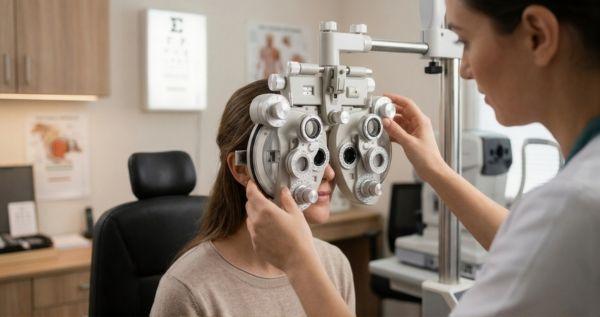
In a subjective refraction exam, the patient uses a manual phoropter or trial frame to gaze through several lenses and provide comments. The eye care specialist accurately prescribes glasses or contact lenses based on the patient's responses, determining the lens combination that offers the clearest and most comfortable vision.
Objective Refraction (Autorefraction)
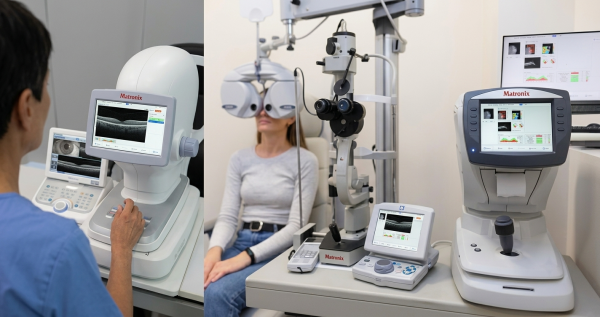
An automated eye exam called objective refraction (autorefraction) assesses how light is refracted by the eye without the need for patient input. The eye care specialist can use an autorefractometer to immediately assess the refractive error of the eye and refine the results with a subjective refraction to determine the final prescription.
Retinoscopy
An eye care specialist uses retinoscopy, an objective refraction technique, to flash a light beam into the eye and see how it reflects off the retina. The examiner can estimate the right prescription and assess the refractive error by putting various trial lenses in front of the eye. This is particularly helpful for patients with special needs, young children, and individuals who are unable to clearly describe their vision.
Cycloplegic Refraction
A specialist refraction test called cycloplegic refraction is carried out after using medicated eye drops to temporarily relax the focusing muscles of the eye and dilate the pupils. This technique offers a more accurate estimation of refractive errors, especially in young people and children or when latent hyperopia, or hidden farsightedness, is suspected.
Why Is a Refraction Test Important?
A refraction test is required to discover refractive defects like myopia (nearsightedness), hyperopia (farsightedness), astigmatism, and presbyopia at an early level. The test assists eye care specialists in determining the appropriate prescription for glasses or contact lenses by accurately determining how light is focused within the eye. Blurred vision, eye strain, headaches, and trouble focusing are all lessened with proper vision correction, especially when reading, using a computer, or performing other close-up activities.
A refraction exam not only improves visual clarity but also makes daily activities like driving, learning, working, and using electronic devices safer and more comfortable. It is also an essential component of a thorough eye exam, giving important details about a person's vision and assisting eye care specialists in tracking changes over time and suggesting necessary follow-up or corrective care.
How Is a Refraction Test Performed?
Before the Test
The eye care specialist will inquire about your eyesight, eye health, and any symptoms like headaches or blurred vision ahead to the refraction exam. Pupil-dilating or cycloplegic eye drops may be used if a more thorough examination is necessary, especially for youngsters or specific eye disorders, but otherwise, no extra preparation is needed.
During the Test
DThe examiner will measure your refractive error using a phoropter, autorefractor, or retinoscope while you stare at an LED Vision Chart(eye chart). In order to compare various lenses, you will be asked to respond to questions like "Which is clearer, lens one or lens two?" This procedure aids in determining the most suitable prescription for contact lenses or glasses.
After the Test
Following the inspection via lensmeter, the eye care specialist will discuss the results and, if vision correction is required, provide a prescription. As part of a thorough eye checkup, a refraction test typically takes ten to twenty minutes. The majority of patients are able to return to their regular activities right away, though pupil dilatation may cause fuzzy vision for a few hours.
What Do Refraction Test Results Mean?
The measurements required to accurately prescribe glasses or contact lenses are provided by the results of a refraction test. Sphere (SPH), Cylinder (CYL), Axis, and ADD Power are commonly prescribed. SPH shows how much correction is required for either farsightedness (positive value) or nearsightedness (negative value). While the Axis, which ranges from 1° to 180°, indicates the direction of astigmatism correction, CYL quantifies the degree of astigmatism. ADD Power is an extra magnifying power that is primarily recommended to those with presbyopia for reading or close-up vision.
A visual acuity value, such as 20/20 vision, which indicates that you can see at 20 feet what a person with normal vision can likewise see at 20 feet, may also be included in the results of a refraction test. Reduced visual acuity is shown by values like 20/40, which means you have to be 20 feet away to see what a person with normal vision can see from 40 feet. When combined, these prescription values assist eye care specialists in selecting the right lenses to enable comfortable, clear vision and successfully correct refractive problems.
What are Conditions Diagnosed Through a Refraction Test?
A refraction test can assist diagnose common refractive defects such myopia, hyperopia, astigmatism, and presbyopia, allowing eye care experts to prescribe the appropriate vision correction.
Myopia (Nearsightedness)
A refractive defect known as myopia causes light to focus in front of the retina rather than directly on it, making distant objects look hazy. A refraction test helps determine the appropriate prescription for clear distant vision by measuring the degree of myopia.
Hyperopia (Farsightedness)
When a person has hyperopia, light focuses behind the retina, making close objects appear hazy. The degree of farsightedness and the proper corrective lenses to enhance both near and far vision are determined by a refraction test.
Astigmatism
Astigmatism is a condition where light focuses unevenly on the retina due to an irregularly shaped cornea or lens. A refraction test determines the cylinder power and axis required for perfect correction, which causes blurry or distorted vision at all distances.
Presbyopia
Due to decreased lens flexibility, presbyopia is an age-related disorder where the eye gradually loses its capacity to focus on close objects. In addition to identifying presbyopia, a refraction test establishes the extra reading power needed for bifocal, progressive, or reading glasses.
What are Benefits of a Refraction Test?
A refraction exam ensures clear and comfortable vision by accurately prescribing glasses or contact lenses. It is a rapid, painless, and non-invasive process that usually takes a few minutes to finish.
Frequent refraction tests also assist in tracking changes in vision over time, enabling medical experts to modify prescriptions as necessary. The test lessens eye strain, increases visual comfort, and improves overall quality of life for daily activities including driving, working, reading, and using digital devices by successfully correcting refractive problems.
What are the risks and limitations of a Refraction Test?
Risks of a Refraction Test
A refraction test carries very little danger and is a non-invasive, painless, and safe process. Repeatedly focusing on letters during the exam may cause mild discomfort or temporary eye strain for certain patients. Pupil-dilating eye drops may cause blurry vision and increased light sensitivity for a few hours, but these side effects are normally temporary and go away on their own.
Limitations of a Refraction Test
Retinal diseases, optic nerve problems, glaucoma, cataracts, and other eye ailments cannot be diagnosed by a refraction test alone. Instead, it is intended to assess refractive errors and determine the appropriate prescription for glasses or contact lenses. For a thorough evaluation of eye health, it should always be carried out as part of an extensive eye examination. Furthermore, the final prescription may be impacted by inconsistent input because the accuracy of subjective refraction depends on the patient's reactions.
Author's Bio

Mr. Rajender Gupta
(Director, Matronix Optotechnik Pvt. Ltd.)
With a vision to make advanced eye-care technology accessible across India and beyond, the Director of Matronix Optotechnik Pvt. Ltd. has been leading innovation in smart ophthalmic solutions since founding the company in 2019. Building on decades of industry experience and the global legacy of the Matronix brand since 2007, he has transformed the company into a trusted name in precision eye-testing equipment.
Related Posts
Frequently Asked Questions
Yes. A refraction test is commonly known as an eye power test because it measures your refractive error to determine the correct prescription for glasses or contact lenses. It helps diagnose myopia, hyperopia, astigmatism, and presbyopia.
A standard refraction test usually takes 10 to 20 minutes. If pupil-dilating or cycloplegic eye drops are required, the overall appointment may take longer due to the time needed for the drops to take effect.
No. A refraction test only measures refractive errors and determines your vision prescription. It cannot diagnose conditions such as glaucoma, cataracts, retinal diseases, or optic nerve disorders. A comprehensive eye examination is required to detect these conditions.
Adults should generally have a refraction test every 1–2 years, while children, older adults, or individuals with changing vision or existing eye conditions may require more frequent eye examinations as recommended by their eye care professional.