
Binocular Vision Test: Purpose, Procedure, Benefits & more
Published On: 01/Aug/2026Table of Contents
- • What Is a Binocular Vision Test?
- • What are the types of Binocular Vision Tests?
- • Cover-Uncover Test
- • Alternate Cover Test
- • Near Point of Convergence (NPC) Test
- • Worth Four Dot Test
- • Stereoacuity Test
- • Prism Testing
- • Maddox Rod Test
- • Accommodation Testing
- • Why Is Binocular Vision Important?
- • How Is a Binocular Vision Test Performed?
- • Before the Test
- • During the Test
- • After the Test
- • What are the risks of a Binocular Vision Test?
- • What Does a Binocular Vision Test Evaluate?
- • What Do Binocular Vision Test Results Mean?
- • Which conditions are diagnosed with a Binocular Vision Test?
- • Convergence Insufficiency
- • Convergence Excess
- • Divergence Dysfunction
- • Eye Teaming Disorders
- • Strabismus (Eye Misalignment)
- • Amblyopia (Lazy Eye)
- • Accommodation Disorders
- • Poor Stereopsis (Reduced Depth Perception)
- • What are the benefits of a Binocular Vision Test?
- • What are the limitations of a Binocular Vision Test?
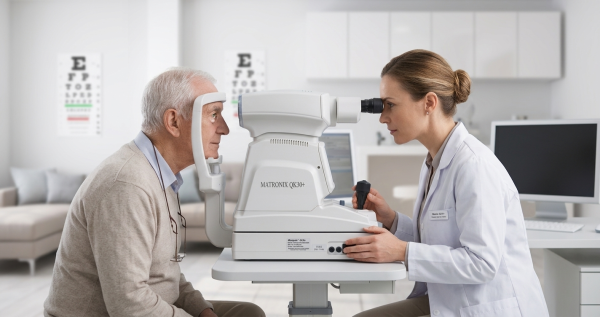
The capacity of both eyes to cooperate to create a single, distinct, three-dimensional image is known as binocular vision, and it allows for comfortable observing. In order to identify issues that may impact reading, learning, driving, and other everyday activities in both children and adults, binocular vision testing assesses eye alignment, coordination, and focusing ability. These evaluations, which are a vital component of a thorough eye exam, assist in the early detection of vision issues and direct the proper course of therapy for the best possible visual performance.
What Is a Binocular Vision Test?
A set of eye tests called a binocular vision test evaluates how well both eyes cooperate to create a single, sharp image. A binocular vision exam assesses eye alignment, concentrating capacity, eye motions, and coordination in contrast to a visual acuity test, which evaluates how well each eye can see. It also looks at stereopsis, or depth perception, which enables the brain to make correct distance judgments.
Everyday activities including reading, writing, using digital gadgets, driving, playing sports, and completing tasks requiring fine hand-eye coordination all depend on having healthy binocular vision. Symptoms including eye strain, headaches, blurred vision, double vision, and trouble concentrating might result from issues with eye teaming or focusing. Early detection of these problems enables eye care specialists to suggest the best course of action to enhance visual performance and comfort.
What are the types of Binocular Vision Tests?
Assessments that measure various aspects of binocular vision include the cover test, stereopsis (depth perception) test, convergence test, near point of convergence (NPC) test, and fusional vergence test. When used in combination, these tests assist eye care specialists in accurately diagnosing and treating issues related to eye alignment, coordination, focusing, and depth perception.
Cover-Uncover Test
When the opposite eye is covered, the cover-uncover test determines whether one eye drifts. It assesses how well both eyes maintain alignment and aids in the detection of persistent eye misalignment (tropia).
Alternate Cover Test
The alternative cover test requires covering both eyes alternately to disturb binocular vision. It is used to quantify the degree of eye misalignment and detect concealed eye abnormalities (phoria).
Near Point of Convergence (NPC) Test
The Near Point of Convergence (NPC) test evaluates the degree to which the eyes can focus on a close object while turning inward. It is frequently used to diagnose convergence weakness, which can lead to headaches, eye strain, and reading difficulties.
Worth Four Dot Test
The Worth Four Dot Test measures binocular fusion and suppression to determine whether both eyes are functioning adequately. Additionally, it aids in the detection of certain binocular vision abnormalities including double vision (diplopia).
Stereoacuity Test
By evaluating the brain's capacity to integrate images from both eyes into a single three-dimensional perspective, the stereoacuity test gauges depth perception. It is necessary for tasks that call for perfect hand-eye coordination and distance judgment.
Prism Testing
Prism testing measures eye deviation and calculates the required amount of correction using specialized prism lenses. It aids in the diagnosis and tracking of disorders including double vision and strabismus.
Maddox Rod Test
The Maddox Rod Test separates the pictures seen by each eye using a set of parallel red lenses to assess eye alignment. Small horizontal or vertical ocular deviations are frequently found and measured using it.
Accommodation Testing
The ability of the eyes to swiftly and accurately shift focus between close and far objects is assessed through accommodation testing using a manual phoropter. It aids in the diagnosis of focusing issues such as accommodative excess or insufficiency, which can lead to headaches, blurred vision, eye strain, trouble reading, or extended near work.
Why Is Binocular Vision Important?
The capacity of both eyes to cooperate to produce a single, distinct, three-dimensional image is known as binocular vision. It is necessary for correct depth perception, which enables humans to accurately assess distances and spatial relationships when engaging in daily activities including reading, driving, climbing stairs, playing sports, and using electronic gadgets. Additionally, stable visual focus and smooth eye movements are supported by good binocular vision, which improves the comfort and efficiency of daily chores.
Because it enhances reading comprehension, learning, hand-eye coordination, and general visual performance, healthy binocular vision is a must for individuals of all ages. Symptoms like eye strain, headaches, blurry or double vision, decreased focus, and impaired depth perception can result from improper eye coordination. Comprehensive eye exams that identify binocular vision issues early on assist guarantee timely treatment and improved long-term visual health.
How Is a Binocular Vision Test Performed?
A set of basic, painless clinical tests are used to examine eye alignment, coordination, concentrating capacity, eye movements, and depth perception in a binocular vision test.
Before the Test
The eye care specialist examines the patient's medical and visual history using an autorefractometer prior to a binocular vision test, taking into account past eye diseases, surgeries, current medications, and use of glasses or contact lenses. In order to choose the best binocular vision tests, they also evaluate symptoms like headaches, eye strain, blurred or double vision, trouble reading, or difficulties focusing.
During the Test
The eye care specialist uses specific clinical tests to measure depth perception, watch how smoothly the eyes move together, and examine eye alignment during a binocular vision examination. In order to assess how well both eyes coordinate and preserve a single, clear image during various visual activities, they also look at focusing capacity, near-point convergence, and binocular fusion.
After the Test
Following the binocular vision test, the eye care specialist discusses if the eyes are functioning correctly, explains the results, and responds to any inquiries. In order to enhance eye coordination and visual comfort, they could suggest therapies like prescription glasses, prism lenses, vision therapy, or additional testing if a binocular vision issue is found.
What are the risks of a Binocular Vision Test?
A binocular vision test is a non-invasive, painless, and risk-free treatment. Most patients have no negative side effects, and neither radiation nor surgical instruments are used. Prolonged testing may occasionally result in slight discomfort, momentary blurred vision, or eye tiredness, although these symptoms typically go away on their own without treatment.
What Does a Binocular Vision Test Evaluate?
By measuring eye alignment, coordination, focusing capacity, eye motions, fusion, vergence, and depth perception, a binocular vision exam determines how well both eyes function together. These tests aid in determining whether the eyes are capable of maintaining single vision and functioning effectively in both close-up and far-off tasks.
Visual tracking and stereopsis (3D vision), which are necessary for reading, driving, sports, and proper hand-eye coordination, are also assessed. Binocular vision testing aids in the diagnosis of binocular vision abnormalities and the recommendation of suitable treatment by detecting issues with eye teaming, focusing, or depth perception.
What Do Binocular Vision Test Results Mean?
The results of a binocular vision exam, which evaluates eye alignment, coordination, focusing capacity, fusion, and depth perception, demonstrate how well both eyes function together. While aberrant results may indicate issues such diminished convergence, eye misalignment, weak fusion, poor depth perception, or accommodation difficulties, normal results show healthy binocular vision.
These results assist eye care specialists in determining the root cause of symptoms like headaches, blurred or double vision, eye strain, and trouble concentrating or reading. In order to determine the best course of action, such as corrective lenses, prism glasses, or vision therapy, the results are analyzed in conjunction with a thorough eye examination.
Which conditions are diagnosed with a Binocular Vision Test?
A binocular vision exam can help you diagnose conditions like strabismus, convergence insufficiency, accommodative disorders, amblyopia, eye muscle imbalance, and other binocular vision issues that influence eye coordination and comfort.
Convergence Insufficiency
When the eyes struggle to turn inward while focusing on close objects, it is known as convergence insufficiency. It frequently results in headaches, impaired vision, eye strain, and trouble reading for lengthy periods of time.
Convergence Excess
A condition known as convergence excess occurs when the eyes tilt inward during near work more than is necessary. Headaches, eye strain, blurred vision, and irregular double vision while reading are possible side effects.
Divergence Dysfunction
When the eyes struggle to focus on far-off things, it's known as divergence dysfunction. This can cause visual discomfort and double vision, especially when staring at distant things.
Eye Teaming Disorders
When both eyes are unable to cooperate effectively to preserve a single, clear vision, eye teaming issues arise. Reading, focus, and general visual comfort can all be impacted by these problems.
Strabismus (Eye Misalignment)
When one or both eyes are misaligned and do not point in the same direction, it is known as strabismus. To avoid vision issues including double vision or diminished binocular function, early diagnosis is essential.
Amblyopia (Lazy Eye)
When the brain prefers one eye over the other, amblyopia, also referred to as lazy eye, results. Early therapy is supported by binocular vision testing, which aids in the detection of related issues with eye coordination.
Accommodation Disorders
The ability of the eyes to shift focus between close and far-off objects is impacted by accommodation disorders. Blurred vision, headaches, eye strain, and trouble completing extended near tasks can all be symptoms of these diseases.
Poor Stereopsis (Reduced Depth Perception)
Reduced three-dimensional vision brought on by poor eye coordination is referred to as poor stereopsis. Accurately estimating distances can be challenging when driving, playing sports, or climbing stairs.
What are the benefits of a Binocular Vision Test?
By identifying issues with eye synchronization, focus, and alignment early on, a binocular vision exam enables timely treatment before symptoms worsen. In addition to making daily chores more pleasant and effective, it can enhance reading performance and lessen headaches, eye strain, blurred vision, and visual fatigue.
Additionally, the test improves hand-eye coordination and depth perception, which is advantageous for precision work, sports, and driving. By identifying visual problems that may impair learning, it helps children perform better academically, and the findings assist eye care specialists in creating individualized treatment programs that may include vision therapy, prism lenses, or corrective eyewear when necessary.
What are the limitations of a Binocular Vision Test?
For a binocular vision test to give accurate results, the patient must cooperate and be able to follow directions. For reliable results, age-appropriate evaluations or adapted testing methods may be necessary for young children or people with limited communication skills.
Retinal, optic nerve, and other structural eye problems cannot be diagnosed by binocular vision testing, despite its great efficacy in assessing eye synchronization and focusing. It is usually carried out in combination with thorough eye exams that include retinal evaluation, refraction, and visual acuity testing using an automatic perimeter for a total assessment of eye health.
Therefore, by assessing how effectively both eyes cooperate, a binocular vision exam is an important part of preserving good, healthy vision. It facilitates early detection of issues with depth perception, eye coordination, and focus, enabling timely detection and effective treatment. Regular binocular vision evaluations are a key component of a thorough eye checkup for both adults and children since they can enhance visual comfort, learning, work performance, and general quality of life.
Author's Bio

Mr. Rajender Gupta
(Director, Matronix Optotechnik Pvt. Ltd.)
With a vision to make advanced eye-care technology accessible across India and beyond, the Director of Matronix Optotechnik Pvt. Ltd. has been leading innovation in smart ophthalmic solutions since founding the company in 2019. Building on decades of industry experience and the global legacy of the Matronix brand since 2007, he has transformed the company into a trusted name in precision eye-testing equipment.
Related Posts
Frequently Asked Questions
A binocular vision test evaluates how well both eyes work together by assessing eye alignment, coordination, focusing ability, fusion, and depth perception. In comparison, a visual acuity test measures how clearly each eye can see at a specific distance.
The duration of a binocular vision test depends on the tests performed and the patient’s symptoms. A basic assessment may take only a few minutes, while a detailed examination that includes additional eye tests may take longer.
No, a binocular vision test is generally painless, non-invasive, and safe. It does not involve surgery or radiation. Some people may experience temporary eye fatigue or mild discomfort during prolonged testing, but these effects usually resolve on their own.
A binocular vision test can help identify conditions related to eye alignment, coordination, and focusing, including strabismus, convergence insufficiency, accommodative disorders, eye teaming problems, reduced depth perception, and other binocular vision abnormalities.